
Alora - Meet & Dating
UG-BODASocial
4.4157.00 Reviews
- Version
- 1.1.7
- Installs
- 50.00K
- Age Rating
- Mature 17+
Screenshots


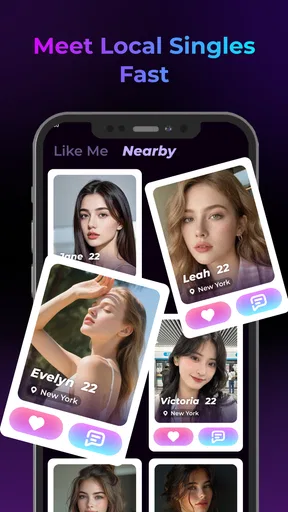
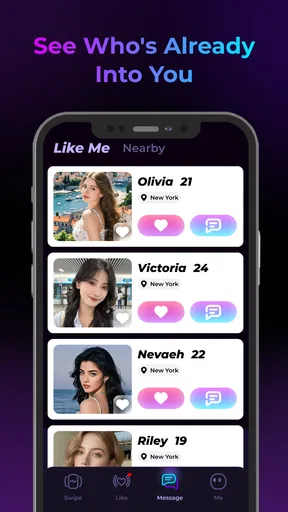

Our Review of Alora - Meet & Dating
 Analysis by Appyee
Meeting people through a social app can sound effortless until the first real obstacle appears: a profile that feels incomplete, a conversation that goes nowhere, or a match that does not fit the kind of connection you actually want. I spent time with Alora - Meet & Dating to see whether its focus on meeting friends, finding activities and starting authentic conversations makes the experience more useful than simply scrolling through profiles.
My overall impression is that Alora is aimed at people who want social discovery to feel more personal than a standard dating feed. It is a free social app from UG-BODA, with a Mature 17+ age rating, and it combines matching with chat rather than presenting itself as only a conventional dating service. That distinction matters: the best results come when you treat it as a way to discover compatible people and possible shared experiences, not as a machine that instantly delivers a relationship.
Getting past the first points of friction
The first challenge with an app like this is not usually installing it. It is deciding how much of yourself to show before you know whether the community will suit you. A vague profile may be quick to create, but it gives a smart matching system very little useful context and gives another person no natural opening for conversation. I found that a more specific profile is worth the extra effort, especially when the goal is friendship or an activity-based connection rather than a quick exchange of greetings.
Alora’s store summary emphasizes smart matching, safe chats and authentic connections. Those ideas sound appealing, but they work best when the user supplies clear signals. Mentioning the kinds of activities you genuinely enjoy, the sort of people you hope to meet and the tone of interaction you prefer creates better starting points than relying on a single attractive photo or a short generic sentence. This is one of the app’s less obvious trade-offs: the matching experience can feel only as thoughtful as the information you put into it.
I would also avoid treating every match as equally important. A social discovery app can produce several possible conversations, but that does not mean every one deserves immediate attention. I had a better experience when I looked for one or two specific points of common ground and used those to begin a chat. That approach reduces the feeling of managing a queue of strangers and makes it easier to notice whether a person is actually responsive and respectful.
Another place users may get stuck is the difference between wanting friendship and wanting dating. Alora’s name and presentation naturally suggest romantic discovery, yet its broader social positioning makes it more flexible. If you are looking for a hiking companion, a local activity partner or simply someone with similar interests, say so plainly. If you want dating, be equally direct without making the opening message feel like an interview. Clear intentions save time for both people.
What to check before judging the matching
When a match feels irrelevant, I would not immediately assume the app is failing. First, review the profile details you have supplied and the expectations you are bringing to the service. A person who wants spontaneous adventures may not connect well with someone seeking long, slow conversations, even if both selected similar interests. Matching can narrow the field, but it cannot replace a little judgment.
It is also worth giving the app enough time to reveal its rhythm. A new social profile may not feel useful after a single short session, particularly if you have not yet completed the parts that explain your personality. I prefer to make a small adjustment, return later and compare the quality of conversations rather than changing everything at once. That makes it easier to tell whether a profile change helped.
For practical setup, use a photo that looks like you now and choose wording that sounds natural when read aloud. Avoid filling the profile with broad claims such as being “fun” or “easygoing” unless you add a concrete example. “I like finding quiet cafés and taking long walks” gives another person something to respond to. This is a small workflow improvement, but it has a larger effect than repeatedly refreshing the match area.
Because Alora is rated for mature users, it is not an app I would recommend to younger teenagers. Adults should still apply ordinary online-social caution: keep early conversations inside the app, avoid sending sensitive personal information and do not let a promising chat pressure you into meeting before you are comfortable. The presence of chat-safety language is encouraging, but no digital safety feature can replace personal boundaries.
Recovering when a conversation stalls
A common mistake is to interpret a quiet conversation as a technical problem. Sometimes it is, but often the opening message simply gives the other person nothing to work with. “Hi” is easy to send and difficult to answer. A better message refers to something visible in the profile and adds a simple question, such as asking how the person became interested in an activity they mentioned.
If a conversation stops after a promising beginning, I would send one considerate follow-up rather than a series of increasingly urgent messages. Then leave room for the other person to respond. This is especially important in a social app where people may be browsing casually, deciding what kind of connection they want or taking a break from chats. Persistence is not the same as pressure.
A useful recovery method is to change the purpose of the conversation. Instead of trying to maintain endless small talk, move toward a low-pressure topic: a favorite weekend activity, a type of place the person enjoys visiting or an idea for a shared interest. Alora’s emphasis on adventures makes this more natural than in apps built entirely around profile browsing. The trade-off is that activity-focused conversation may feel too forward for people who prefer a long introduction first.
If messages fail to send or the interface behaves strangely, I would begin with ordinary checks: confirm that the device has a stable connection, close and reopen the app, and make sure the current installation is being used. The current version is 1.1.7, and it supports Android 7.0 or later. Keeping the operating system and app installation reasonably current is a sensible first step before assuming that a chat, match or profile action has disappeared permanently.
I would also avoid repeatedly tapping a button when an action appears delayed. That can create confusion about whether a request was sent once or several times. Wait briefly, leave the screen and return to it, then check the conversation or match area again. This kind of simple recovery is less exciting than a hidden trick, but it prevents users from turning a temporary delay into a string of duplicate actions.
When the problem is really the situation around the app
Not every disappointing result comes from Alora. Your location, schedule and social expectations can strongly affect the experience. Someone in a busy area may see more possibilities than someone browsing during a quiet period, while a person with a very narrow set of interests may need more patience to find a genuinely compatible connection. I would judge the app by the quality of the interactions it helps create, not only by how quickly the first match appears.
The same applies to notifications and replies. A delayed response may reflect a person’s routine rather than a broken chat system. If you need immediate conversation, Alora may not be the best tool for that particular moment. It is better suited to gradual discovery, where two people decide whether they want to continue talking. Users who expect every match to produce a fast, continuous exchange may find the experience frustrating.
Privacy also deserves practical attention. Do not use a public profile to reveal your home address, workplace details, daily route or other information that makes you easy to locate. When moving from chat to an in-person meeting, choose a public place, tell someone you trust where you will be and arrange your own way home. These steps are not criticisms of Alora specifically; they are sensible habits for any app that helps strangers meet.
There is another important limit: a matching service cannot guarantee that a person is honest, compatible or emotionally available. A polished profile can still lead to an awkward conversation, and a modest profile can belong to someone interesting. I found that the app works better when used as a starting point for evaluation rather than as a substitute for it. Look for consistency, respect and a willingness to communicate clearly.
How Alora compares with familiar alternatives
Compared with a traditional dating-only app, Alora feels more appealing to someone who does not want every interaction judged immediately as a romantic possibility. Its social and adventure-oriented framing gives users a more natural reason to meet through common interests. That can lower the pressure of the first conversation, particularly for people who are open to friendship as well as dating.
On the other hand, a highly established dating platform may be a better choice if your only goal is a large, narrowly romantic pool or a very specific relationship filter. Alora’s broader purpose can be a strength for flexible users, but it may feel less focused to someone who wants a tightly defined dating workflow. Likewise, a local community group or activity-based service may be better if you already know the exact hobby, venue or event you want to join.
Compared with general social networks, Alora has a clearer reason for connecting with unfamiliar people. A normal social feed is often built around existing contacts, while this app is designed around discovery. That focus is useful, but it also means you should be more deliberate about boundaries. You are not simply adding an acquaintance from a shared group; you are entering a space where the purpose of contact needs to be understood by both sides.
The free entry point makes trying it straightforward, although optional purchases range from $4.99 to $139.99 per item. I would start without spending money and first decide whether the available conversations, matching style and overall pace fit my needs. Paid options are easier to evaluate after you understand your normal usage. Buying something early will not fix an incomplete profile, poor communication habits or an unsuitable expectation of what the app can provide.
Who will get the most from the experience
Alora is a good fit for an adult who wants to meet people beyond an existing social circle and is comfortable starting slowly. It particularly suits someone who can describe their interests clearly and is open to more than one kind of connection. If you have recently moved, want a companion for activities or prefer conversations that can lead to real-world plans, the app’s broader social angle is more useful than a purely appearance-driven feed.
A realistic example would be a person with a free Saturday who wants company for a museum visit, a walk or another low-pressure outing. Rather than opening with a request to meet immediately, they could use a profile detail to begin a conversation, see whether the other person communicates consistently and then suggest a public activity only after comfort develops. That workflow uses the app as a gradual bridge from discovery to a possible plan, which is safer and more practical than rushing from match to meeting.
I would skip Alora if you dislike communicating with strangers, want an entirely private social life or expect an app to make the relationship decisions for you. It is also not ideal for someone searching for a highly specialized community where every member shares one narrow interest. In that case, a dedicated group or event service may provide more relevant context from the beginning.
People who are impatient with unanswered messages may also be happier elsewhere. Alora cannot make another person available at the exact time you are online. Its value depends on your willingness to filter, converse and accept that some connections will not develop. That is not a flaw unique to this app, but it is an important part of deciding whether its style matches yours.
My practical verdict after using it
My recommendation is cautious but positive. Alora - Meet & Dating has a useful idea at its center: social discovery can include friendship, shared interests and adventures instead of forcing every interaction into one narrow category. The experience is strongest when I use a specific profile, begin conversations with a real point of reference and treat matching as an invitation to learn more rather than a promise of compatibility.
The app has already attracted over 50 thousand installs and holds a 4.4 average from around 3.2 thousand ratings, which suggests that its approach has found an audience. Those figures are encouraging, but they should not replace your own trial. The right question is whether the people and conversations available to you feel relevant, respectful and active enough for your goals.
My best advice is to complete the profile thoughtfully, test the free experience before considering any purchase, and use a short, natural conversation to assess compatibility. Keep personal details limited, recover calmly from delayed actions and do not confuse a quiet chat with a broken app until you have checked the basics. The real strength of Alora is not instant matching; it is giving a thoughtful user another route from shared interests to a genuine connection.
For adults who want a friendlier alternative to a strictly dating-focused feed, I think it is worth trying. For users seeking a specialized community, instant replies or a tightly controlled romantic search, another service may be a better match. Alora works best when you bring realistic expectations, clear boundaries and enough patience to let a promising conversation develop.
Verdict
Strengths of Alora - Meet & Dating
- Clean, modern interface that is easy to navigate
- Profile discovery feels quick and straightforward
- Useful filters help narrow down potential matches
- Chat features make starting conversations simple
- Suitable for users seeking new social connections
Limitations of Alora - Meet & Dating
- Some features may require a paid subscription
- Match quality depends heavily on the size of your local user base
- Profiles may vary in detail and authenticity
- Notifications can become distracting if left enabled
- Privacy settings should be reviewed carefully before messaging
Similar Picks in This Category
View All
Meta Platforms, Inc.4.6

Instagram4.0

Likee-Live, Chat & Party Games
Likeme Pte. Ltd.4.4

Facebook Lite
Meta Platforms, Inc.4.5

TikTok - Videos, Shop & LIVE
TikTok Pte. Ltd.4.0

Moj: Free Short Drama & Reels
ShareChat4.1
Frequently Asked Questions
What is Alora - Meet & Dating, and how does it work?
Alora - Meet & Dating is a social dating app designed to help people discover potential matches, start conversations, and build new connections. After creating a profile, users can typically add photos and personal details, browse or receive suggested profiles, and interact with people who share similar interests. The exact matching and communication options may depend on the app version, location, and account settings.
Is Alora - Meet & Dating free to download and use?
The app may be available to download at no initial cost, but some features can require in-app purchases, a subscription, or virtual credits. Basic profile creation and browsing may be accessible for free, while enhanced visibility, unlimited interactions, advanced filters, or additional messaging options could be restricted. Before subscribing, check the current pricing, renewal terms, and cancellation rules shown in the relevant app store.
Is Alora - Meet & Dating safe for meeting new people?
Alora can provide tools for meeting other users, but no dating platform can guarantee that every profile is genuine or trustworthy. Avoid sharing sensitive information, financial details, passwords, or your home address. Keep early conversations inside the app, use the reporting and blocking functions when necessary, and arrange a first meeting in a busy public place while informing someone you trust about your plans.
What information is needed to create an Alora dating profile?
Registration requirements can vary according to the platform and the latest version of the app, but users should generally expect to provide basic information such as a name or nickname, age, gender, location, photos, and preferences. Some services may also request an email address, phone number, or account verification. Review the privacy policy and profile visibility settings before adding personal information.
Can I delete my Alora account and control who contacts me?
Most dating apps provide account, privacy, blocking, and reporting controls, and Alora users should check the profile or settings area for these options. You may be able to adjust discovery preferences, limit notifications, block unwanted contacts, or report suspicious behavior. If you decide to leave, deleting the app may not delete your account, so use the in-app deletion process and confirm whether subscriptions must be canceled separately.
